Crystal Houzz blue topaz and mother-of-pearl bracelets in five gemstone colors

Blue Gemstone Comparison

Lapis Lazuli vs Aquamarine vs Blue Topaz

These are three different materials, not interchangeable names for a blue stone. Lapis is opaque and richly patterned; aquamarine is a transparent variety of beryl; blue topaz is a transparent mineral, and most commercial blue topaz is treated to produce its color.

Material facts are separate from traditional stone symbolism. A photo alone cannot authenticate a transparent blue gemstone.

Quick blue gemstone comparison

Material profile

Lapis lazuli

What it is
An opaque rock made mainly of lazurite with possible calcite and pyrite
Look
Royal to midnight blue, often with gold-colored pyrite or pale calcite markings
Hardness
5-6 on the Mohs scale
Common treatment
Some material is dyed, waxed, or oiled to improve color or luster
Often used for
Bold beads, tiles, cabochons, and carved shapes
Read the Lapis lazuli guide
Material profile

Aquamarine

What it is
The blue to greenish-blue variety of the mineral beryl
Look
Usually transparent with a light, watery blue or slightly greenish-blue color
Hardness
7.5-8 on the Mohs scale
Common treatment
Heat treatment is commonly used to reduce green and create a bluer appearance
Often used for
Faceted rings, pendants, earrings, and fine bead strands
Read the Aquamarine guide
Material profile

Blue topaz

What it is
A transparent variety of the mineral topaz
Look
Bright sky blue through deeper Swiss or London blue shades
Hardness
8 on the Mohs scale, with cleavage that still requires impact protection
Common treatment
Most blue color in the market is produced by irradiation followed by heat
Often used for
Sparkling faceted stones and small calibrated beads
Read the Blue topaz guide

How to choose a blue gemstone by appearance

Opaque royal blueChoose lapis lazuli when you want saturated color, visible natural pattern, and a substantial bead or tile shape.
Light sea blueChoose aquamarine when you prefer transparent sparkle with a softer blue to greenish-blue tone and March birthstone context.
Bright aqua sparkleChoose blue topaz when you prefer a clearer, brighter blue in small faceted beads or cut stones and are comfortable with standard disclosed treatment.

Hardness and everyday bracelet care

Mohs hardness measures resistance to scratching, not resistance to every kind of damage. Lapis is softer at 5 to 6. Aquamarine is 7.5 to 8, and topaz is 8, but topaz has cleavage and can still be damaged by a hard blow. In a bracelet, exposed bead edges, stringing, metal plating, and contact with watches or countertops also matter.

Use warm soapy water conservatively and follow the most delicate component in a mixed piece. Avoid steam and ultrasonic cleaning for lapis and for assembled jewelry that includes mother-of-pearl or plated metal.
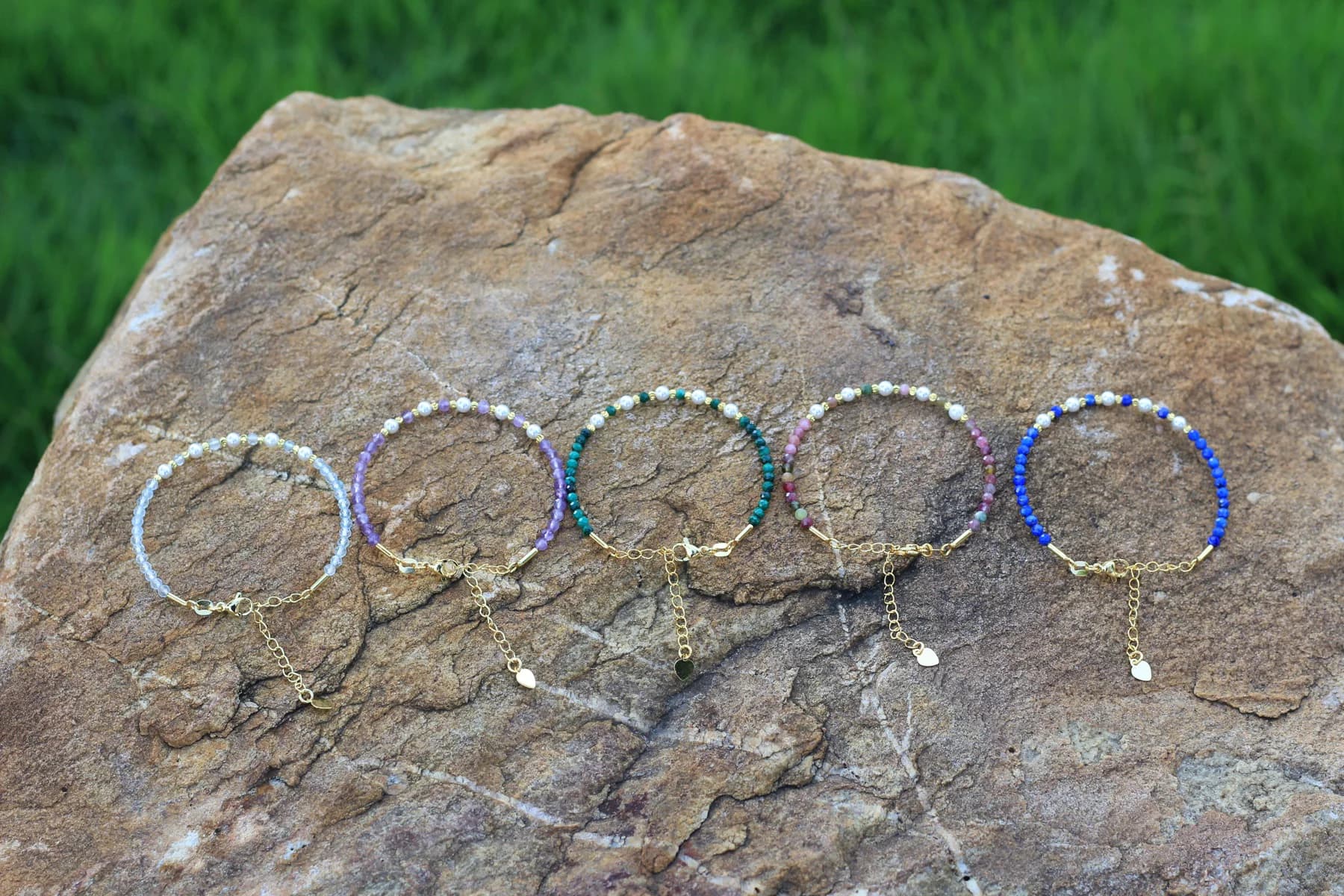
Compare current Crystal Houzz pieces

Blue gemstone FAQ

Are aquamarine and blue topaz the same gemstone?

No. Aquamarine is a variety of beryl, while blue topaz is topaz. They can look similar when pale and transparent, but they have different mineral identities and typical treatments.

Is lapis lazuli transparent like aquamarine?

No. Lapis lazuli is normally opaque. Its saturated blue body color and possible pyrite or calcite markings make it visually different from transparent aquamarine and blue topaz.

Which blue gemstone is best for an everyday bracelet?

There is no single best choice. Aquamarine and topaz resist scratching better than lapis, but topaz still needs protection from hard impacts. Bracelet construction, bead size, clasp, and how you wear it matter as much as hardness.

Can I identify aquamarine or blue topaz from a photo?

Not reliably. Color and a product photo can suggest possibilities, but transparent blue gems can overlap in appearance. Use accurate seller disclosure and, for valuable pieces, an independent gemologist or laboratory report.

Do their symbolic meanings prove what the stone is?

No. Traditional meanings are cultural or personal associations, not a material-identification method. Gem identity is established through gemological properties.

Gemological references

Material descriptions, Mohs hardness, treatment notes, and care guidance are based on the Gemological Institute of America's public education pages.