Dry it flat
Pat dry, reshape gently, and keep the bracelet away from direct heat and sun.
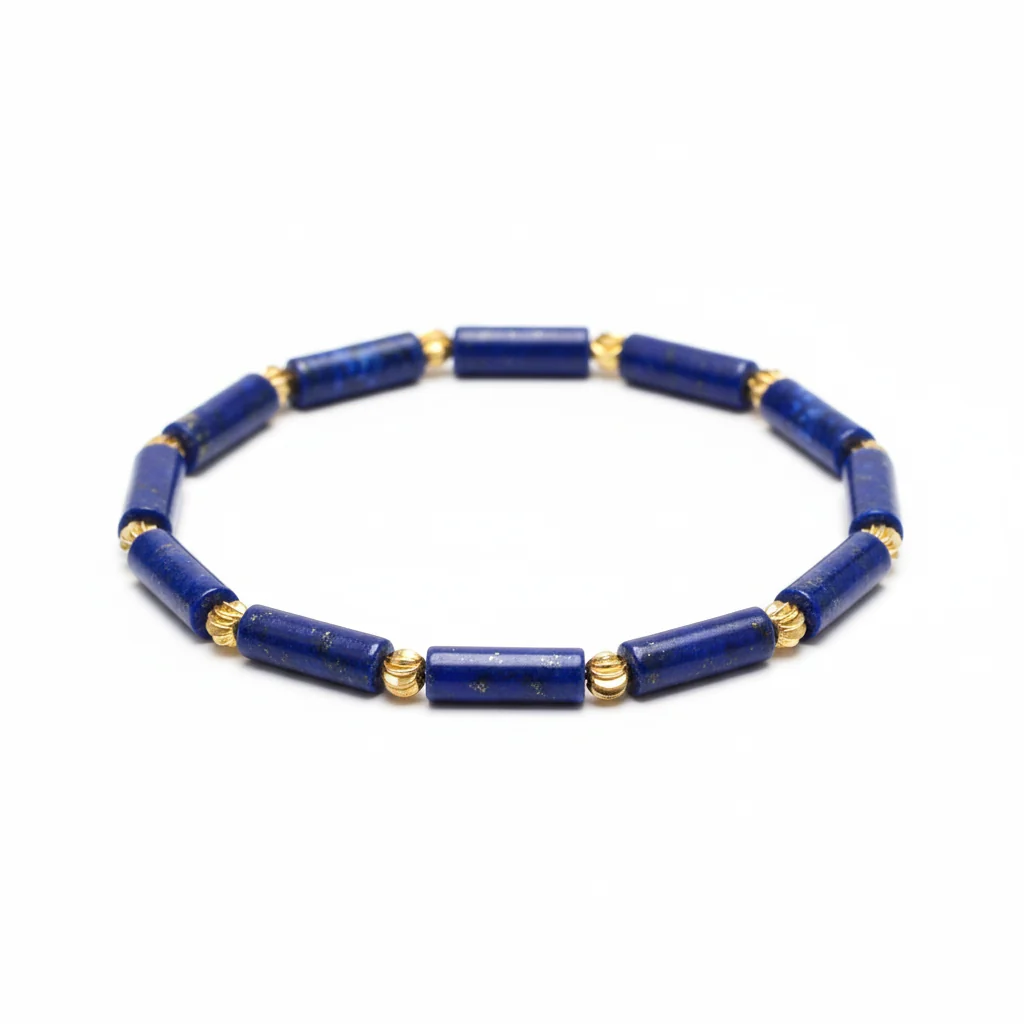
Lapis Bracelet Care
Start with a soft, dry cloth. For light buildup, test one less-visible bead, then use a barely damp cloth with a small amount of mild liquid soap. Do not soak the bracelet, and dry it promptly. This cautious method protects the lapis and the elastic, cord, glue, or metal parts that may be more sensitive than the stone.
GIA identifies warm, soapy water as the safest way to clean lapis lazuli and advises testing a small area because some dye treatments are not stable. GIA also places lapis at about 5 to 6 on the Mohs scale, so it can be scratched by harder materials.
That gem guidance is only one part of finished-jewelry care. A bracelet can include stretch elastic, thread, knots, adhesive, plated or tone-finished spacers, and other stones. Use the most delicate component as the practical limit, and do not assume the treatment status of a lapis bead from its appearance.
Remove the bracelet before showering, swimming, exercise, dishwashing, or household cleaning. The concern is repeated exposure: water, soap, shampoo, chlorine, salt, heat, friction, and stretching can affect treatments and shorten the life of the bracelet's stringing and finishes.
If the bracelet gets splashed, blot it dry rather than rubbing hard. Let it air-dry flat before putting it back in a pouch or jewelry box.
More aggressive cleaning is not a shortcut. It can alter a treatment, dull a surface, scratch the stone, weaken a cord, or damage a coating before the bracelet looks clean.
Pat dry, reshape gently, and keep the bracelet away from direct heat and sun.
Use a soft pouch or lined compartment so harder jewelry does not scratch the beads.
Look for stretched elastic, a loose knot, lifted plating, residue, or a chipped bead.
Stop if color transfers to the cloth, the surface becomes sticky or dull, a bead is cracked, a setting is loose, or the stringing is frayed. Use a jeweler who can inspect the full construction. If the material or treatment must be identified, use a qualified gemologist rather than a destructive home test.
Brief contact with a barely damp cloth can be appropriate, but avoid soaking a finished bracelet. Lapis may have dye, wax, or oil treatments, and water can also affect elastic, cord, glue, and metal finishes. Test first and dry promptly.
It is better to remove it before showering. Repeated water, soap, shampoo, heat, and stretching can shorten the life of the bracelet even when the stone looks unchanged.
Do not soak an assembled bracelet. GIA describes warm, soapy water as the safest cleaning method for lapis itself, but a finished bracelet may also contain treatment, elastic, cord, adhesive, or plated hardware. Use the solution on a wrung-out cloth instead.
Do not use an ultrasonic or steam cleaner. Avoid commercial dips unless a qualified jeweler has confirmed that every stone, treatment, metal, coating, adhesive, and stringing material is compatible.
Wipe it with a dry cloth after wear when needed. Use a damp-cloth cleaning only when visible buildup remains. Frequent wet cleaning is usually unnecessary.
Store it dry and flat in a soft pouch or a separate lined compartment. Keep it away from direct sun, heat, humidity, and harder jewelry that could scratch the beads.