Color and mineral variation
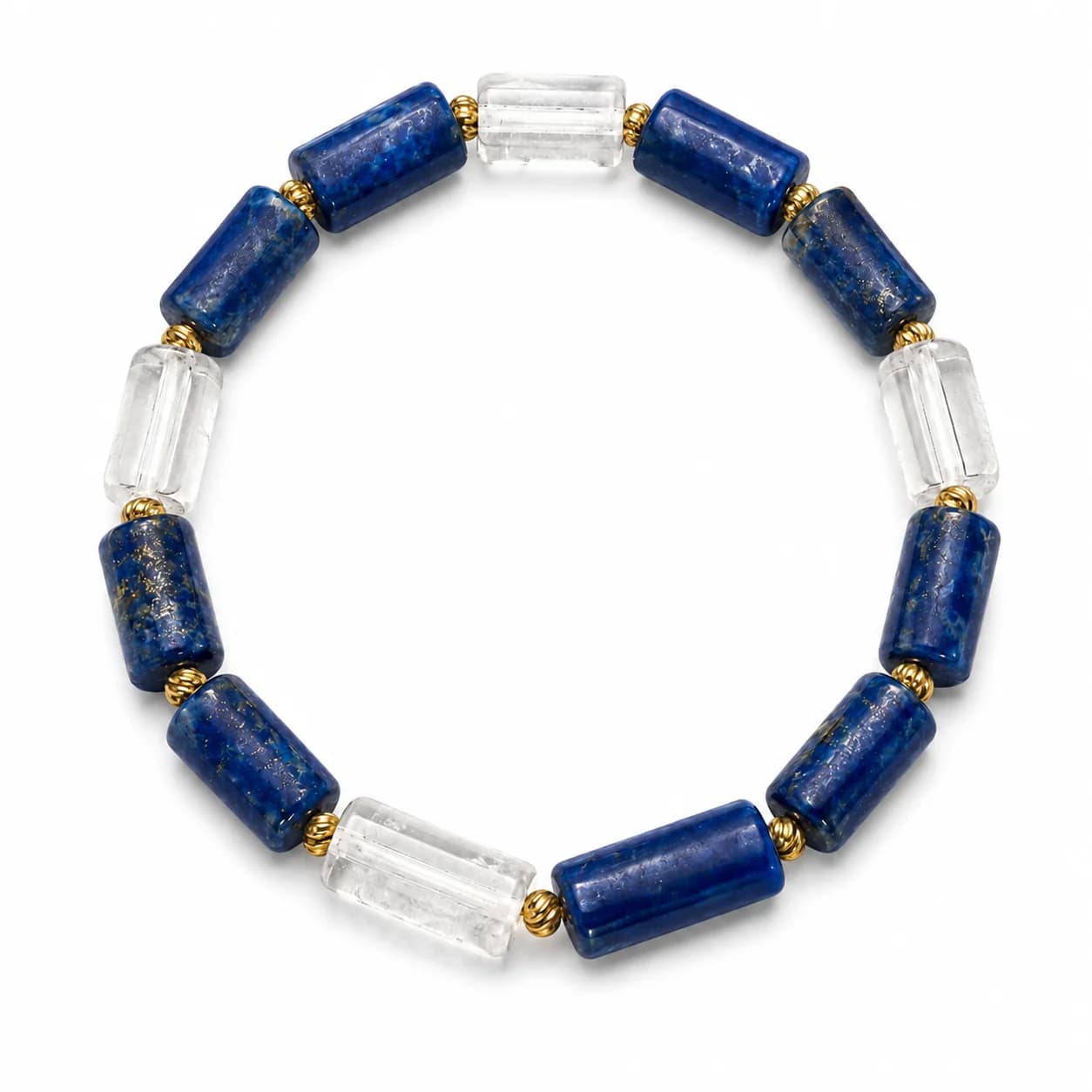
Blue distribution, calcite, pyrite, opacity, and bead variation can support a closer look.
Lapis Buyer's Guide
No single visual trick proves that lapis is natural, untreated, or correctly labeled. Start with its blue color and mineral variation, check what the seller discloses, and use a qualified gemologist when certainty matters. Do not damage finished jewelry with scratch, heat, or solvent tests.
Blue distribution, calcite, pyrite, opacity, and bead variation can support a closer look.
A cold feel, gold flecks, weight, price, or one destructive test cannot confirm every lapis material.
A qualified gemologist or laboratory can identify the material and detectable treatments.
Lapis lazuli is a rock rather than one single mineral. GIA describes it as an aggregate made mainly of blue lazurite, whitish calcite, and gold-colored pyrite. The proportions and distribution of those minerals can change from one piece to another.
That is why genuine lapis can look strongly uniform, softly mottled, marked with pale calcite, sprinkled with pyrite, or free of obvious flecks. Natural variation is expected, but no particular pattern acts as a universal authenticity stamp.
Natural lapis can run from slightly greenish blue to violetish blue. A strong blue is desirable, but color alone cannot prove that a bead is natural or untreated.
Lapis is an aggregate of several minerals, so different beads can show different blue distribution, pale calcite, or gold-colored pyrite. High-quality lapis can also look relatively uniform.
Small pyrite flecks can occur naturally, but genuine lapis does not need visible pyrite. Gold-colored marks can also be imitated, so flecks alone are not proof.
Whitish calcite matrix is common in lapis. More calcite usually lowers commercial value, but its presence does not automatically make the material fake.
A useful listing separates natural stone, known treatment, plated metal, glass, plastic, ceramic, and composite material instead of using only a vague label such as blue crystal.
A qualified gemological laboratory can identify the material and detectable treatments. A photograph, temperature check, or social-media opinion cannot provide the same level of confirmation.
These current Crystal Houzz photographs show three lapis constructions under product lighting. They are useful examples of visible variation, not laboratory certificates and not a promise that every bead will look identical.
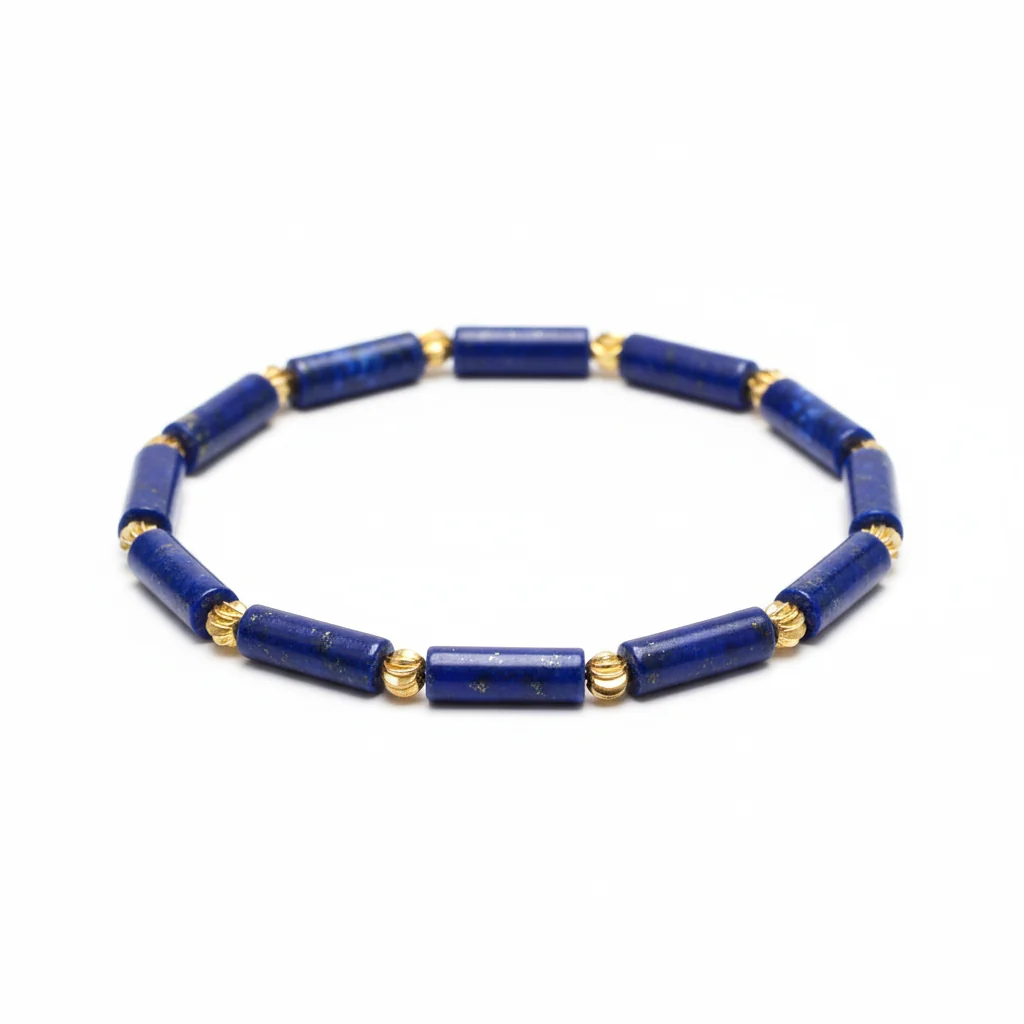
A mostly even blue appearance can still include small differences from bead to bead.
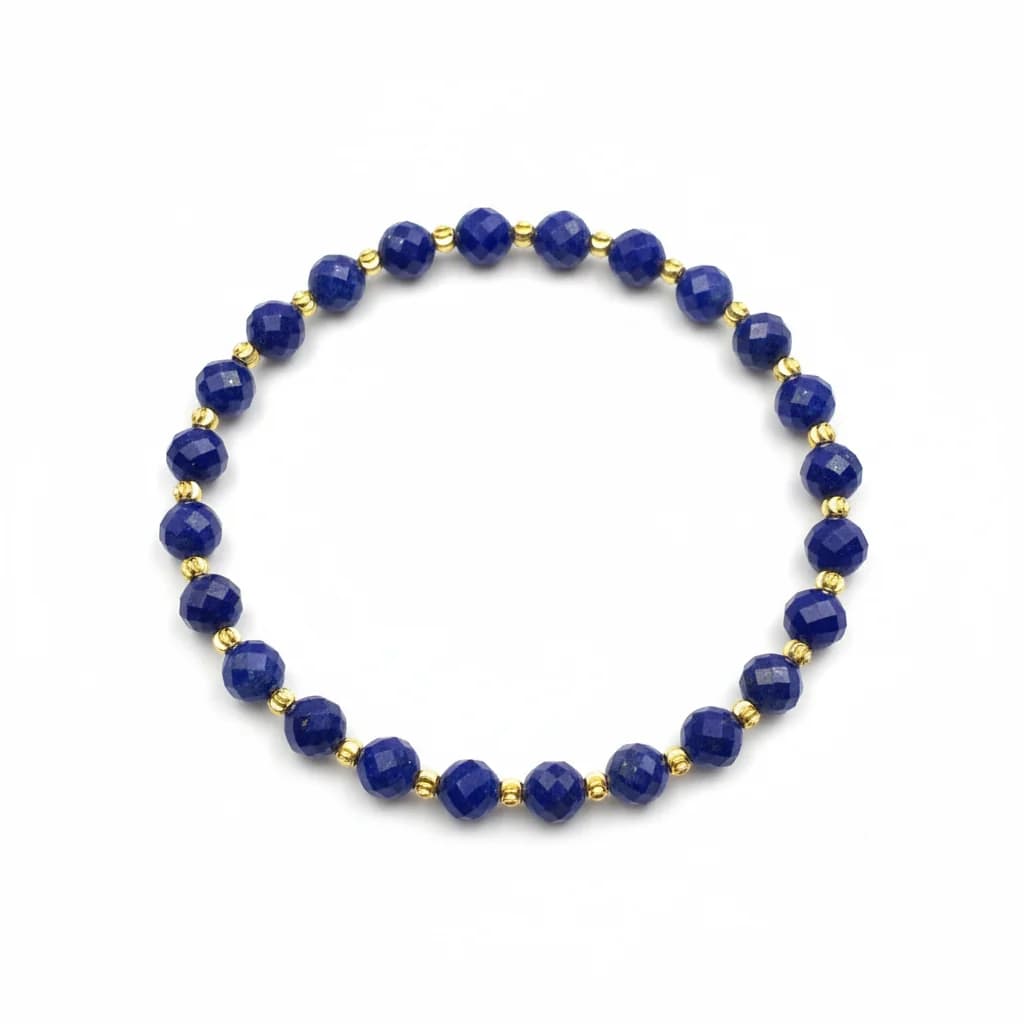
Cut and lighting change how color, surface texture, and small markings appear in photographs.
Some beads show stronger tonal variation and pale matrix than others within one finished piece.
GIA notes that natural lapis may be dyed to improve color or conceal pale calcite. It may also be impregnated with wax or oil to improve color and luster. A treated natural stone is not the same thing as glass, plastic, or ceramic made to imitate lapis.
The practical issue is disclosure. A listing should not present a treated stone, imitation, or composite as something else. For an expensive purchase, ask for written material and treatment information before relying on marketing language.
Avoid scratch tests, hot needles, prolonged soaking, household chemicals, and acetone on finished jewelry. GIA warns that solvents or heat can damage the surface of treated lapis. Those methods can also harm elastic cord, adhesive, coatings, or plated metal before they answer the material question.
Warm soapy water is the safer care method for lapis when the full jewelry construction allows it. Never use steam or an ultrasonic cleaner on lapis jewelry.
No. Gold-colored pyrite can occur naturally in lapis, but fine-quality material may have little or no visible pyrite. Its presence or absence is only one visual clue.
No. White or pale areas can be calcite, one of the minerals commonly found in lapis lazuli. Heavy calcite may reduce commercial value, but it does not by itself prove an imitation.
Not necessarily. Natural lapis can be dyed to deepen its blue or conceal pale calcite. It is still natural stone, but the treatment should be disclosed. Glass, plastic, and ceramic are imitation materials rather than treated lapis.
Do not apply acetone or another solvent to a finished bracelet. Solvents can affect treated lapis and may also damage elastic, adhesive, coating, or plated metal. Ask the seller or use a gemologist instead.
Use an independent gemological laboratory or qualified gemologist. GIA identification reports can identify the material and name detectable treatments; casual home checks cannot provide that level of certainty.