Clarity
The clear blue color is often used as a visual reminder to slow down and think clearly.
Stone Meaning Guide
Blue topaz is a transparent gem valued for its crisp aqua-to-sky-blue color. In modern symbolic jewelry, it is often associated with clarity, calm communication, and honest self-expression. Those ideas are traditions and personal reminders, not promised results.
Topaz is its own mineral species. It occurs in several colors, including colorless, yellow, orange, pink, brown, and blue. It ranks 8 on the Mohs hardness scale, so its surface resists scratches better than many softer jewelry materials.
Hardness is not the same as toughness. Topaz has cleavage and can chip or split after a sharp impact. That distinction matters more for everyday care than an isolated hardness number.
Natural blue topaz exists, but pale or colorless material is much more common. Much of the blue topaz sold today is produced by irradiating colorless topaz and then applying controlled heat. GIA describes the resulting blue color as a standard treatment used in the modern gem trade.
Treatment does not automatically make the gem synthetic. The underlying material is still topaz, but known treatment should be disclosed so the product description is clear.
Read GIA treatment guidanceThe clear blue color is often used as a visual reminder to slow down and think clearly.
Many crystal traditions connect blue stones with honest, measured self-expression.
A blue topaz piece can support a personal ritual without claiming to treat stress or anxiety.
Blue topaz and aquamarine can both appear aqua blue, especially in small faceted beads, but they are not interchangeable names. Aquamarine is a blue to greenish-blue variety of beryl. Blue topaz belongs to the topaz mineral species and is commonly color treated.
Confirm that the stone is listed as blue topaz rather than aquamarine or generic blue crystal.
Review bead size, metal plating, clasp, extender length, and every other assembled component.
Small differences in shade and transparency can occur even when the material label is accurate.
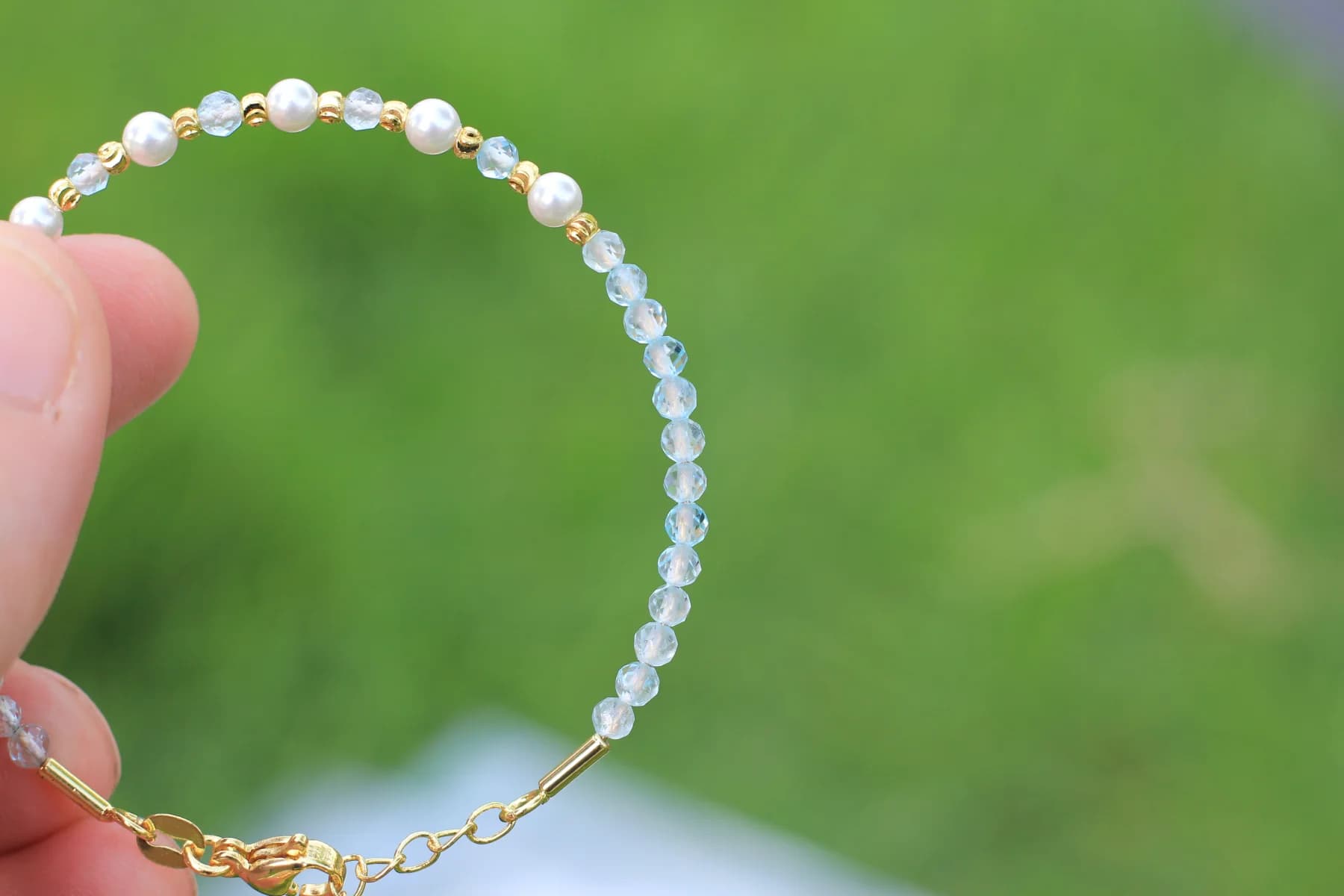
The Crystal Houzz design pairs 3mm faceted blue topaz with five mother-of-pearl shell beads, gold-plated brass details, a lobster clasp, and an extender chain. The shell beads are mother-of-pearl, not cultured or freshwater pearls.
Review the exact bracelet materialsRemove blue topaz jewelry before showering, swimming, exercise, sleep, or rough work. Avoid steam, ultrasonic cleaners, harsh chemicals, high heat, and sudden temperature changes. For mixed-material jewelry, follow the care limit of the most delicate part.
Blue topaz is traditionally associated with clarity, calm communication, and thoughtful self-expression. These are symbolic associations for reflection, not guaranteed physical or emotional effects.
Natural blue topaz exists, but much of the blue topaz used in modern jewelry begins as colorless topaz and is irradiated and heated to create a stable blue color. Sellers should disclose known treatments.
No. Blue topaz is topaz, while aquamarine is a blue to greenish-blue variety of beryl. They can look similar in small beads but are different gem materials.
Topaz has a Mohs hardness of 8, but it also has cleavage and can chip from a hard impact. Remove assembled blue topaz jewelry before showering, swimming, exercise, or rough work.
Use lukewarm water, mild soap, and a soft cloth or brush when the full jewelry construction allows it. Avoid steam, ultrasonic cleaning, harsh chemicals, and sudden temperature changes.